|
Top Stories
|
| India is celebrating the 150th anniversary of Vande Mataram | | | | 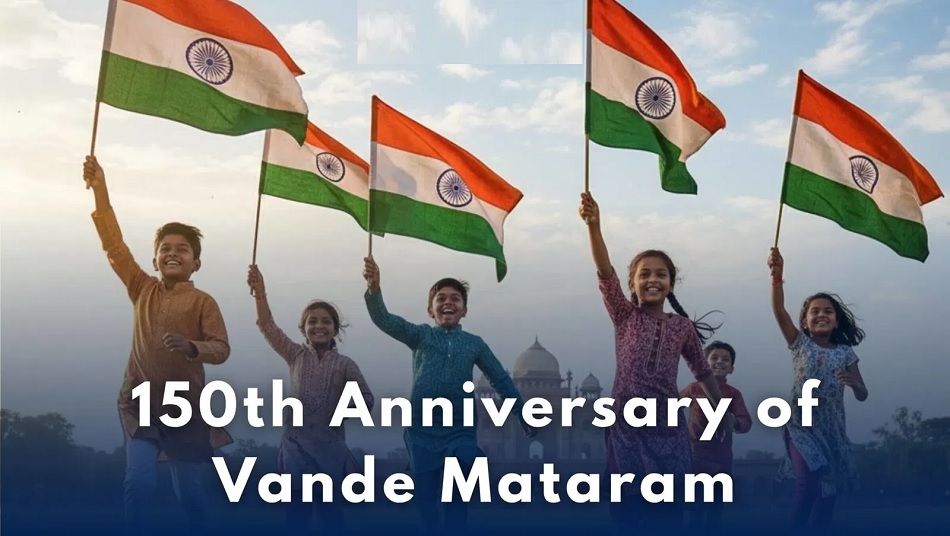 New Delhi December 8:- New Delhi December 8:-
India is celebrating the 150th anniversary of Vande Mataram with a year-long commemoration from November 7, 2025, to November 7, 2026. This initiative aims to honor the song's enduring spirit and its historic role in India's freedom movement. The celebrations will include mass singing of the full version of "Vande Mataram" across public places, participation from citizens of all segments, and the release of a special commemorative coin and postage stamp. The Prime Minister of India, Narendra Modi, inaugurated the celebrations, emphasizing the song's significance as a mantra and a slogan that fueled the freedom struggle with energy, inspiration, sacrifice, and penance. The year-long commemoration will offer new inspiration and infuse fresh energy to the citizens of India, connecting them with the song's revolutionary and spiritual essence
Prime Minister of India inaugurated the year-long celebrations marking 150 years of the National Song “Vande Mataram” in New Delhi on 7th November 2025.
A national commemorative initiative (2025–26) to celebrate the 150th anniversary of “Vande Mataram”, connecting citizens—especially youth—with its revolutionary and spiritual essence that united India’s freedom struggle.
Written by Bankimchandra Chatterji on 7th November 1875 (Akshaya Navami), the song first appeared in his literary journal Bangadarshan as part of the novel Anandamath, portraying the Motherland as divine, strong, and nurturing.
Vande Mataram” evolved from a poetic invocation to a national mantra of resistance. In 1896, Rabindranath Tagore sang it publicly at the Calcutta Congress Session.
Its lyrical imagery—“Sujalam, Sufalam, Malayaja Sheetalam”—celebrated India’s natural and moral beauty, envisioning a free, prosperous nation.
Features:
Symbol of unity blending spiritual devotion and national identity.
Recognized by the Constituent Assembly (1950) as having equal honour with the National Anthem.
Represents the civilizational idea of Bharat—balance between moral strength, knowledge, and courage.
Role in the Freedom Struggle:
Became a rallying cry during the Swadeshi Andolan (1905) and anti-Partition protests in Bengal.
Banned by the British for its revolutionary power, yet echoed across marches, prisons, and gallows.
Revered by leaders like Sri Aurobindo (as a mantra of awakening) and Mahatma Gandhi (as the vision of undivided India).
The slogan “Vande Mataram” unified diverse regions, faiths, and languages under one patriotic spirit.
About Vande Mataram Movement:
What it is?
A regional resistance movement in Gulbarga (Karnataka) during the Hyderabad-Karnataka freedom struggle (1948), inspired by the slogan “Vande Mataram” to oppose the Nizam’s autocratic rule.
History:
On 9th November 1948, freedom leaders like Sharanabasappa and Qadeer Dargah led peaceful marches chanting Vande Mataram, facing violent repression by the Nizam’s police.
Despite attacks, the movement spread across the region and culminated in unity pledges presented to Sardar Vallabhbhai Patel, who later praised their courage and integrated the region into the Indian Union.
| | | | |
|
|
| |
| |
|
|